We read horror fiction - and watch slasher films, and gruesome documentaries, and online terrorist videos, and accident footage, etc. - because of what Joseph Conrad called "the fascination of the abomination." We like to view things that disquiet us, don't we? We hope that we see something that isn't meant for innocent eyes. Death revealed - and dodged - is as exhilarating as it is horrifying. Our minds sometimes can't take it, but also can't willingly turn away. We seek out the abominations, because we are fascinated by them. We can't help it, apparently, due to a misfire in our individual development, or the natural condition of the human brain. I'm not sure which is to blame, as I'm a fiction writer, not a goddamn psychiatrist.
Abominations are on full and varied display in Adam Nevill's House of Small Shadows, and I as a reader of this exceptional novel am incredibly fascinated. It was as if Nevill was ordered to craft a contemporary Gothic novel twisted inside out - and sewn back up again - that incorporated all the things I find spooky as shit, including but certainly not limited to:
- Small forgotten towns
- Incredibly old houses, owned by incredibly old people
- Antique dolls
- Puppet shows/marionettes
- Non traditional taxidermy
- Ritualistic parades
- Secretive groups
Throw in circus clowns and unnamed creatures with impossibly long appendages (which do not, to my memory, appear in House of Small Shadows, although the lighting is pretty dim in some of those scenes, so you never know), and you've run the full gamut of my own personalized Creep List.
As it stands, House of Small Shadows contains enough of the truly terrifying to make it a landmark read, and an unforgettable exercise in horror imagery that has not dimmed since regrettably finishing the book a few months back. It's all still there, raw and vibrant, like a fresh coat of paint on a wooden puppet face. The places, the lighting, the sounds and smells are still raw in my brainpan, and threaten to stay that way. Probably more impressive still is Nevill's ability to sustain suspense and dread throughout nearly 400 pages, starting very early with the arrival of our protagonist Catherine Howard, an appraiser (a "valuer" in British parlance) for estate auctioneer Leonard Osberne, who is sent to an aged Gothic manse in the English countryside known as Red House, which lies just outside the mostly deserted town of Magbar Wood. The interior of Red House lives up to its name in terms of sumptuous decor, and Catherine discovers that each of the numerous rooms of the house serve as staging areas for impossibly intricate dioramas of World War I horrors played out by stuffed and positioned rats, as well as a bedroom populated by half animal, half human marionettes tucked into a tiny bed like sleeping children. The entire collection Catherine was sent to appraise for a possible career-making and record-setting estate sale was created by secretive genius M.H. Mason, who was once a man of the cloth until the blood and mud of trench warfare stained that holy fabric, twisting him away from God and into the arms of utter seclusion at Red House, where he devoted his sizable talents and the rest of his life to the creation of tiny, static horror shows, and the recreation of Medieval "cruelty plays" acted out by marionettes for live audiences, and eventually a BBC camera crew. Footage of the latter never made the airwaves, as the imagery was too disturbing, too bizarre even for the notoriously eccentric British.
This is the set-up for Catherine, and for us, and as we get the sneaking suspicion of what is to come for our hard luck protagonist, we can't help but sit back and watch, breathless and silent and squirming with claustrophobia, as she is forced to confront all sorts of weird, out-of-the-way, and mostly forgotten places, bringing her face to face with a litany of weird, out-of-the-way, mostly forgotten things. Old traditions, based on older knowledge of arcane wisdom blotted out of human memory for a reason. But things linger in the quiet places untouched by modernity. Eyes look out, and prayers are whispered to ears that don't belong to god or beast. Catherine has come to escape her past, avoid her present, and secure her future, and these powerful urges give her the courage to remain on site and finish her work, lest it all unravel for her. Unfortunately, as this is horror fiction we're talking about, it unravels for her anyway, in a multitude of unsettling ways.
Nevill's language is perfectly balanced, clean with a perfect dusting of melody, and his ability to build atmospherics is masterful. We're in those rooms with Catherine, dealing with these incredibly lifelike dead things. We can see the clothing and wig and skin and teeth and wheelchair of Edith Mason, the elderly niece of M.H. who now oversees Red House and the weird, multi-million dollar installations that clog the place. We can hear the heavy footsteps of Maude, the mute maid whose inscrutable expression hints at deeper mysteries surrounding this family and their strange house. And those marionettes... We're inches away from them as they are arranged in their tiny beds, facing away from us, grotesque hair covering the backs of their misshapen heads. We don't want them to turn around.
That expectancy, that impending doom, all blossom organically from the foundation Nevill lays like black soil, so fertile it literally pops and fizzes with potential life. And we as readers are caught in it up to our necks, our chins. Something very bad will happen, and happen soon. But when? And where? Will it be as bad as you imagine? Will it be worse? We scream for Catherine to leave the house, for her unfit boyfriend Mike or her boss Leonard or even her backstabbing coworker Tara to show up and wake her from the nightmare, but things are never as simple as that, and Nevill deftly spins a web that invisibly traps Catherine from the beginning, giving her just enough twine to allow her a frantic run at hope, at escape, before reaching the end of the sticky tether, and winding it back up again, slowly and determinedly, drawing the moth to the spider waiting at the center of the beautifully constructed latticework nest.
House of Small Shadows reads like one unbroken, spellbinding tracking shot capturing places that you never want to see where things happen that you that you never thought possible, Nevill's grainy camera picking up details along the way, hinting that something terrible can and probably will occur in the next frame. Martyrs will be torn to shreds, and parades will begin in the streets. A booming voice track begins, narrating the spectacle, as the images become more and more unspeakable. And we just sit and watch. Fascinated.
_________________________________________________________________________

Thank you, Adam, for taking the time to consider and answer these questions.
Thanks for having me, Ted.
I always like to start out with a bit of relevant background, to set the stage. When did you first realize that you had a talent for, and probably would be pursuing, writing as a viable undertaking? Were you a big reader as a child? What books first drew you in?
My Dad started it. He read to my brother and I most evenings when we were boys, even until we were around twelve. Hundreds of books, from Twain to Tolkien. But the author who really stirred and then directed my imagination in a particular direction was M R James. Those stories had a real impact, deep and long lasting. I feel his spirit in most of what I write now.
 But I spent most of my boyhood outdoors in New Zealand, playing sports and roaming the bush and coastline with friends. I wasn't a bookworm as such. We went to the library every week as a family, though, so I did read a fair amount of adventure fiction, military historical fiction, and fantasy initially, and even my mother's Famous Five books. Plus, I lived in a house that resembled a library, so books were a constant and alluring presence. I had all sorts of reading phases and enthusiasms as an older child, with Robert E Howard's Conan, Edgar Rice Burroughs, even westerns. The really more intense reading for me started, oddly, when most young people drop books, around the ages of fourteen to seventeen. And that was when I started reading in a voracious way that has never stopped. I burned through Lovecraft at the same time as Shakespeare's tragedies and the modernists, and that interest in the best genre fiction and the classics continues. I've never been a reader that sticks to one thing; I've always read widely, though I have a vision for my own fiction that is quite singular and strange, at least to me.
 All of my directionless imaginings and perpetual daydreaming found a purpose for itself in my mid-teens. That's when I first knew that I was going to take writing seriously, at some point. The book that actually changed my direction in life was Joyce's Portrait of the Artist as a Young Man. I had little adult life experience. I was 16. But that book, though Joyce exercised some irony (that I missed) does include a map of artistic development from infancy to maturity, and it was the first book I read in which I was assisted in understanding what was going on inside me - most of which I'd been ashamed of and had longed to be a simpler person. But following its ideas, even guidance, I consciously decided to collect experience, to read a lot more than I had already read, and to take an English degree after school in order to further my goals formerly in an artistic direction. Besides a few early fragments, I only really committed myself to writing as a purpose for life around the age of 25. And because I'd waited so long, I just couldn't stop once the sluice was opened. I went off like a geyser.
I was not an exceptional student at school, or anything like that. There were even concerns about my attention span too, in junior schools. But I think that is key, because what was often mentioned as a cause for my inattention was my tendency to stare out of the window. As a child my imagination used to entirely consume me, and it still does. I think most of my conscious life is still spent there, daydreaming. I found routine jobs as an adult, and many subjects at school, to be near physically painful if they inhibited that need to daydream. I think my writing is just a more formal approach to daydreaming.
When and how did you first discover dark literature or material?
The need had been created by my Dad, through reading us James as I mentioned, Collier, Saki, Del la Mare and many others. But writers like C S Lewis and Tolkien and Stevenson were full of things that filled me with a euphoric dread too.
What do you consider your "big break" that ushered you into big press publishing? When did you know you'd probably be able to quit your day job?
 That was my eleventh novel, Apartment 16 in 2009. I'd had ten novels published by that time, including my first horror novel, Banquet for the Damned, by PS in 2004 (though I'd finished it many years before that). So I'd been cutting my teeth for years and been a professional writer around full-time education and various jobs since my mid-twenties. But my break into the bigger international publishers arrived at the age of forty. After I'd finished Banquet I'd either fastidiously worked on Apartment 16 and The Ritual, or just tinkered with subsequent drafts for years, around life and work. But those two books ended up in a publishing auction in London at a time when horror became the new black again, in 2009. Apartment 16 had been on submission for some time too.
Two hours after the book deal was agreed, I was made redundant from my position as Fiction Editor of Virgin Books. I'd held that position for five years, so the next step was decided for me. I could have gone full time as a writer then, in 2009, and stayed full time until now. But I decided to continue working part time for various publishers because they offered interesting work, and I still do work two to three days a week as an editorial director. The rest is spent writing and living in equal parts. My wife and I also started a family around the time the first book deal happened and that's also why I keep working at two incomes. And that has often been hard, maintaining two professions as well as being a parent. I've worked part or all of every day since 2009, but it's provided a good life for us by the sea and I have additional impetus and motivation because of my daughter's future. Being in this position as a writer, and being a parent, was unimaginable for me before 2009. I don't take a day of it for granted.
No less than The Guardian dubbed you "Britain's answer to Stephen King," which - based on King's label as the king (sorry) of horror - is very high praise indeed, both from a critical and commercial standpoint. Does this level of acclaim effect your writing? Do you feel an extra layer of expectation in each new book, and more beholden to the machine, or just as creatively free as always?
It was flattering, but the King is also the benchmark that all of us in horror are measured against, in the mainstream media. That's the main reason my name was even mentioned in relation to the King; I was one of a few horror writers given a shot beyond the small presses, and who else are we ever compared to? But any critical acclaim hasn't changed what I am writing, but it has served as a huge motivational boost. Good notices still take me by surprise. Motivational, and good for morale for sure, though I remain driven by my own dissatisfaction and frustration. I think resting on one's laurels is catastrophic for writers.

I've also been extremely lucky with my editor, Julie at Pan Macmillan, in that she let me write what I wanted to, and in the way that I wanted to. She made plenty of good suggestions about what I delivered, but they weren't requests. Had I been a big front list writer with more at stake for the publisher, things may have been different. Or if the first two books had tanked. But the first two were successful and that may have bought me more trust. There has never been any pressure from my publisher, though, to write something else, or to write differently. A blessing, and it's given me an opportunity to start building a body of work at the rate of a book each year, and to even push into my own deepest strangeness with novels like Apartment 16 and House of Small Shadows, with a big publisher and a wider audience.
What I feel most acutely as a kind of unceasing pressure, is the bigger picture, and over that I have no control. This covers the business of publishing of which I am constantly aware, book selling, and the digital revolution. But I've never broken a sweat over editorial strong-arming because there never has been any.
Where did the central ideas and themes of House of Small Shadows originate? What are you trying to impart with the book?
It all came out of images I'd carried around from childhood and that continued to amass into adulthood. Curiosities and grotesque things that I'd remembered and that affected me in a particular way - paintings, objects, old television shows for children, historical artifacts, wax museums, houses I had visited, places I had worked, odd people I'd come across, all kinds of disparate things that struck strange chimes in my imagination, or little detonations. As a child, my reaction to some of these images and artifacts was a combination of terror and enchantment, and a lingering sense of that childlike imaginative state I have retained. I wanted to explore those enduring feelings and memories at novel-length, and to see if I could sustain them and preserve them as age took its toll. I began writing scenes and most of the story grew out of the act of writing. That pretty much happens every time too.
With its strange rural villages that can only be understood by a local, The House of Small Shadows seems to be partly autobiographical, if only in terms of geography. How much of your own upbringing is in this book?
I've spent most of my life in cities - Birmingham, Auckland, Worcester, London - but have often stepped outside of them and into the rural as a tourist. I think House of Small Shadows came from a sense of what was unfamiliar and incongruous to a city boy, and therefore charged with a peculiar magic. Had I grown up in the countryside I doubt I'd have written the book in the same way.
The sense of detail and historical touches relating to dolls and puppetry - and 19th century houses - is impressive in House of Small Shadows. You list the numerous resources you used as research for the book. How much actual research did you do (instead of general knowledge you already possessed), and did it involve hours sitting amongst the stacks in libraries? (I'm hoping like hell your answer is "yes" to the latter)
Yes. In a local library in London, that must have been frequented by actors, drama students and theatre designers, I actually sat beside a section on puppetry the first time I went in there to order books on fashion and Gothic Revival architecture that I'd found in an online catalogue for London libraries, and I'd needed a local library to make the inter- library loans for me. I went to order the books and also to find somewhere quiet to sit and work, because we had a baby in the house. While there, I found the stuff on puppets and theatre next to my table, and then discovered that they had a restricted section on taxidermy behind the counter ... that was uncanny. I'd wanted to include all of these things in my story and had bought some rare second hand books on animal preservation already. I had sat in the right chair in the right library. Or did small hands guide me?
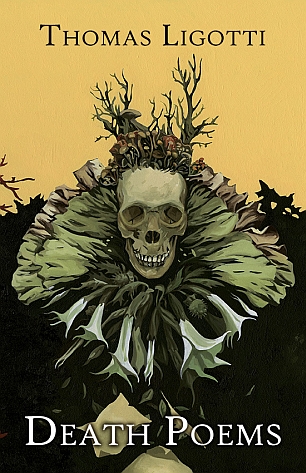
You credit Thomas Ligotti as an inspiration for House of Small Shadows. What about Ligotti's writing sparked the idea, or informed the novel?
With Ligotti, it was the sense of combining a gaudy aesthetic of puppet theatre and animated false bodies, a kind of neglected, grotesque carnival that both mocked and said something poignant about existence; a commentary on fate and our insignificance. I liked the idea of something old, but childlike and damaged that was a witness to a dreadful truth. Ligotti lit a path that I walked, on my own rickety wooden legs.

In doing my own research, I couldn't find any information on the "martyrs" discussed in the book, nor the cruelty plays. Are these lost bits of historical knowledge, or something you created?
All of it is a collision of fact and my own imaginings, and what my imagination did to fact. I'd struggle to unravel it all now. But I became really interested in holy relics and Christian martyrdom while reading for Last Days, and even went to see the biggest collection of holy relics ever assembled in one place - at the British Museum - and in the same timeframe I visited an incredible museum of childhood. It was like an overdose. It all made me giddy. But I adapted what I knew of morality plays and Jacobean and Elizabethan tragedies into a new form of drama - the cruelty play, but performed by puppets. At one point puppet theatre was probably the biggest form of street entertainment in England, but the dramas weren't ever written down and recorded. Some character names survived and titles of plays, but not much else. I imagined they must have been ghastly dramas, and perhaps seditious.
What is your writing routine, if a routine exists? Is consistency and ritual important - putting your ass in the chair, as Joe Lansdale espouses - or is a writer better served to wait until the Muse hits, and then follow the Coleridge interpretation of art ("a spontaneous overflow of powerful emotions")?
It's changed so much as my life has changed. Being single in my twenties and not responsible for much beside myself was a very different experience to writing around a full time job as a publisher of 85 books each year, and that took over my existence for five years. That too was different to writing as a self-employed man with a family across the last six years, but the latter has undoubtedly become my most productive period - more stability, more security, and more time.
In the twenty years in which I've been going, I have had to write in many different ways and routines enforced by circumstances and situations - evenings, mornings; all day every day at times when I took breaks from careers; just when I felt like it while really stressed and mentally tired; sometimes when I couldn't stop and it was like a madness; or only during Sunday afternoons; two hours before midnight; and in all kinds of compromised environments - that has been a constant until now. So I'm never very helpful when I am asked this question. I just never gave up; if I wasn't physically writing I was mentally writing; the two things joined up often enough and consistently enough for me to finish books. I've never given up on a book but have felt like burning them all at some point during composition.

For the first time ever, at the age of 46, I now have my own office too - a dedicated work space. And in it I try and write at least four days each week. The days change, life can take over, but I'm flexible. I've had to write in so many environments. I have never had the luxury until now of being able to guarantee silence, privacy, even a proper desk. The Ritual was mostly written on someone else's computer on a kitchen table, in a noisy shared house. No wonder people not only die in it, but are eviscerated.
Keeping your head in a novel is the most important thing, even if most of your work on it is conducted in the imagination. Starting something and completely ignoring it at first draft stage can be catastrophic. Even if you are scribbling notes long hand, or thinking through possible scenes, or just imaging the characters talking, you are at work on your book. But that can't just keep on going; you do have to sit down and go. My intention is to do something every day, be it virtual or actual. At times I pull off twelve hour sprees, though only usually when rewriting these days. At other times I produce nothing new in an entire day. I don't word count. My only hard rule is to try and complete a scene if I start it on a particular day. Keep your head in it and maintain the voice and it will get written, eventually. My head is always in the current book, and working around the next one too in a side room. The next one always seems more exciting because ideas are exciting and near effortless, but in there lies a cautionary tale. Nearly everything you write will be hard work, and should be. If you think something was slam-dunked on a first draft, read it three months later and try not to self-harm.
And yet, somehow, I've completed 16 books in twenty years. The urge, the compulsion, the desire, the sense of purpose, has surmounted the many disruptions.
I've begun to ask others this question, as I have recently asked it of myself: What do you think it is about the dark, the weird, uncanny, and the horrifying that draws you/us in, that appeals to us, that almost - odd to say - makes us happy? This query is especially pointed to individuals - such as you - who seem to be well adjusted, positive, and living happy lives.
Why thank you. That's a great question about why we do it too. I'd suggest, without examining it too deeply, it is an attraction forged from a range of things. As so much is. As a rule, I don't tend to think of one explanation for anything anymore in a world obsessed with "nailing it". Everything is just too complex. Indecision and being unsure is better than being completely wrong. Uncertainty and mystification is often part of a long process of consideration that gives, at least, a half truth, or something approximating an understanding of what we are trying to figure out. It's often the best that we can hope for.
So for this question, I'd have to say it's a combination of things for me - temperament and sensitivity and formative experiences, nature and nurture, and how those things then reacted to the world and its art, and formed a kind of voice, or presence inside me, that keeps creating my version of enchantment and terror. I suspect I may be a writer of the grotesque, more than a writer of anything else that is subdivided within the fiction of the fantastic. I'm inspired by the grotesque as much as by beauty. Comfort, peace, beauty, health; all of these things I adore, but running at a constant parallel is my ability to be aghast. And I suspect most horror writers are also writers of some form of protest, even if it's against themselves, most definitely other people in my case, society, or the entire human condition, maybe of actual existence and our place within it. I am aghast and I protest and horror is the residue. Why isn't everyone writing horror?
As one of the standard bearers for horror fiction in the mainstream marketplace, how do you feel the genre is received and discussed in relation to "literary fiction?" Based on how it is viewed at present, do you ever see a time when this perception will change?
 Literary fiction is an odd opponent for horror. But a common foe for many, or so I often see cited. In terms of status and respectability, the contributors to each may often look upon one another with contempt too. Though literary fiction is probably as much of an endangered species as horror fiction, and I think the fields share a great deal of other common ground. Literary fiction is full of horror and the weird; horror and the weird are full of literary stylists. Ramsey Campbell and Peter Straub write horror but are great literary stylists; Ian McKewan and John Burnside write literary fiction but are great writers of horror (see Glister, A Summer of Drowning, The Devil's Footprints from Burnside).
Both fields struggle commercially and seem prey to capricious zeitgeists in commercial publishing. One has an establishment of erudition, academia, cultural respectability and specialist imprints behind it; the other has none of that besides the specialist imprints and S T Joshi as a critic, but horror fiction has a vast and enviable bedrock of popular culture endorsing and sustaining it in the public consciousness; this wider horror culture may eclipse the literary wing, but it also restores it, and draws nutrition from the books. I look upon horror as a culture now, and an ecosystem that sustains itself; the broader culture of horror still needs the literary wing to provide ideas (even if they are often exhausted into tedium in the other media). Look at Ligotti in True Detective. Who saw that coming? Horror is a very clear and powerful cultural form and force, no doubt in my mind. I am part of a vast and wriggling mass, a network.
For many, the bottom line will persist for the fiction declared to be horror: that it is pulp, juvenile, sensationalist, perhaps even unhealthy. We can all find the low hanging fruit to endorse that point of view too. But that is the view of the ill-informed and the poorly read (and of older readers and writers, I find, if I am honest). The view that literary fiction is unreadable, exclusive, pretentious, and boring is equally as ill-informed a point of view. I read as much of the literary as I do horror. I also try to combine my influences from both fields.
I think perceptions have changed for horror too. I find less disapproval these days too, because horror culture is dominant and has been for years, maybe not in books, but in comics, gaming, television and the cinema. Younger people in my experience, under thirty, rarely criticize horror. They seem smitten with it, and have embraced it in some form (television has given horror an incalculable boost in recent years). Within horror culture, horror fiction is mostly mentioned in the past tense to me by older readers - "I used to read Herbert and King ..." and so on, but not by the young in this way. But the literature is always going to be a harder sell for all generations, though, than the other pictorial media, because fiction requires a more active concentration and the gratification is not instant and immediate; it also requires time and that's in ever shorter supply. The more sophisticated the writing, the greater the demand made on the reader too.
In a pictorial age in which choice is bewildering and cognitive overload is at its peak, that is not going to change - sit down and read a horror novel or watch the new series of The Walking Dead, or play a multi-player computer game in which you shoot waves of the undead? I don't fancy the odds of books. But some, who love reading, and the comforts and confirmations and special pleasures it provides, will keep us in books and horror, at some level.
The value of any fiction to publishers is mostly monetary, because it's a business. If it sells it is lauded. The writers I tend to read, place a different value upon horror that is not dependent on market forces.
At the risk of irritating either your hometown team or your readers across the pond, do you think there is a difference in the British interpretation - and creation - of horror fiction, than that produced in the United States? If so, why do you think there is a difference?
I couldn't conclusively define the differences between the horror of the two schools, because most writers seem to be constantly expanding and diversifying. But I can offer comments on the writing I have read.
You have faucets and we have taps ... But seriously, I think both territories have produced some extraordinary work within the slough of despond the fiction suffered, and right into its recent peak, and perhaps because horror was out of vogue our respective horrors had an underground renewal. As a very broad brush stroke, perhaps, more Brits may still lean more toward the Gothic tradition, and the impact of early Clive Barker; more of the Americans and Canadians may lean more to the cosmic horrors of Leiber and Lovecraft and Ligotti. But that is a big simplification. Many of us are bonded too by the King, and to degrees by Straub, Simmons, Campbell, Herbert and Barker - there is more common ground than difference.

At the speculative end in the UK, Ramsey Campbell and M John Harrison may have given us a British DNA of the speculative that Aickman really started in earnest. Joel Lane, Nicholas Royle, Conrad Williams and others have done something extraordinary with the weird and horrific in the everyday, that reminds me of M John Harrison, early Clive Barker, and Ramsey Campbell, and that tone seems peculiarly British at times. Writers like Gary McMahon, Simon Bestwick, Simon Kurt Unsworth recently seem to be forging a social realism in their horror, that has a distinct regional Northern quality. Then you have Frank Tallis, Reggie Oliver, Sarah Waters, Mark Valentine and John Howard, who are all class acts, and may do more to maintain the spirit of the classic British Victorian and Edwardian masters than most. Sarah Lotz and Sarah Pinborough prove increasingly versatile in expanding the borders of the hellish in all kinds of directions, and through the thriller and crime mediums of which John Connolly and Michael Marshall are masters (in my eyes Connolly is one of the great modern horror writers, as well as one of the great modern mystery writers).
Across the water, you're doing the same with your own regional influences. The cosmic, occult and strange horrors of writers including Laird Barron, Simon Strantzas, Brian Evenson, Richard Gavin, John Langan, Jonathan Thomas, Linda Rucker, Paul Tremblay, Matt Cardin, Nathan Ballingrud, Gemma Files, to name a few, suggest a new movement to me in North American literary horror, with more and more of you appearing and seemingly each month, like yourself, Josh Malerman and Scott Nicolay even more recently. You are all, literally, spoiling us. Caitlin R Kiernan's vision has permeated deep, as has Kathy Koja's, Poppy Z Brite's, the genre defying Steve Rasnic Tem and also Brian Hodge.
Both sides have had key specialists in Romero's vision - David Moody in the UK and Jonathan Maberry in the US. If no one read Alden Bell's books, do so.
There are so many more writers that I should mention, and a great many I haven't even read yet; the fact that there are so many authors creating genuinely startling and refreshing work, all of the time, is a wonderful sign. I defy anyone to read deep into the modern anglosphere of horror and claim they only see pulp. What I am more keen on pointing out is the quality on both sides of the Atlantic and the special friendship we share. I think as writers we all read each other as much as we can, but the national preferences I tend to encounter more in readers, because of where the books are available and have the most presence.
What would be your advice to beginning writers eager to embark on a career in horror fiction?
Read as widely in the field as possible, from the masters and classics to the moderns. Soak it up. But make sure you read widely beyond horror too. You will learn just as much elsewhere, or you should do.
Get good advice on the craft, on your actual use of language, before you get tied up with characterization and plotting. Start with the actual language you're using and how you arrange it - that almost seems lost at times. If you don't acquire enough craft you may remain a literate adult and never become a writer ... I'd also say that unless you feel manifestly driven to write, don't bother. I've spent ten years reading slush piles.
But if this is for you, start allowing your own deeps to overflow, unrestrictedly, to find your own voice, your own thing, your own innate strangeness. Once that spring is bubbling you can find ways of creating stories out of the raw imaginative material. Looking for what to write about should be the easiest thing of all, but how you write about it is then key.
All of these things take time and application; don't rush, or be too eager to start publishing, as hard as that temptation may be these days.
In terms of music (and totally, selfishly, off topic), I know you're a big metal fan. What bands do you really dig, now and going back to the origins?

If you saw how many CDs and vinyl records are in my office, you'd understand how difficult that is to answer. Currently, I'm heavy. I'm playing a lot of Lamb of God, Slipknot and metalcore. Bathory and Sanctuary are enjoying a revival in my space. For a time before that it was doom and industrial: Trouble, The Skull, Ministry, NIN, and my punk faves.
I cut this with folk rock, classical and some ambient noise.
There's not been a subgenre of heavy rock or metal that I haven't appreciated in part.
What's next for you, in terms of releases, and those projects on which you are currently working?
Lost Girl is out October 2015. A thriller and a near future disaster scenario as much as it is a horror novel. I began that book in 2013 and delivered the book in November 2014. Since then, the story has started to become uncannily relevant.

My next novel is due for 2017 and I've been writing that since late last year, my working title is Yellow Teeth, and it's a kind of unconnected companion piece to Last Days, a move into psychic terror after bludgeoning myself with No One Gets Out Alive and Lost Girl.
I've also written five short stories this year and they should be out next year. And on that note, I may have another surprise next year too.
Thank you so much for your time, Adam, and much luck and success in your future endeavors.
Thanks for having me, Ted. I appreciate your absorption of me into the nameless dark of the Cosmicomicon.
________________________________________________________________________
Pick up Lost Girl TODAY, to celebrate it's official global launch by Pan Macmillan, at Amazon or at your local retailer of fine books that dwell on incredibly dark things. I've started reading the book, and it's a grim, dark, worrisome treat, centered around a father's desperate journey to find his kidnapped daughter amid a world reeling from the early stages of a global societal collapse, based on climate change and the resultant lack of fresh water, erosion of arable land, and general overpopulation. This is real world horror on so many levels, set in a time not so distant that it doesn't resonate, and scare the shit out of you. Grab a copy from that box below, if you don't mind losing a few fingers. Nevill's got claws.

Find Adam LG Nevill lurking just below the placid surface of his website here, listening to metal and contemplating the slow, ignominious unraveling of humanity.