Showing posts with label Short Fiction. Show all posts

Friday, March 18, 2016

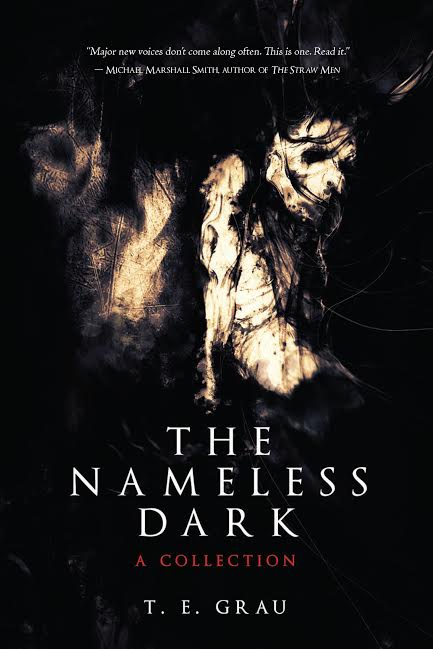
Review News: The Nameless Dark receives stellar treatment in The Haunted Omnibus


After writing everything other than fiction for so many years, I still have a hard time processing the fact that people will sit down and devote hours and hours to reading stories I write, then feel moved enough to compose extensive, detailed, thoughtful reviews on these stories, with the primary purpose of helping draw more readership to certain books and authors. It's a wonderful thing.

Writer Jose Cruz did just this, and posted up one of my favorite reviews The Nameless Dark has ever received at his excellent electronic journal devoted to short dark fiction, The Haunted Omnibus, which is what The Cosmicomicon would be if I was a better reviewer, had better focus, and better taste in blog template design.

Its Mission Statement:
The Haunted Omnibus was established to recognize the long tradition and continued perseverance of the short form within the literature of horror, the dark fantastic, and the Weird. 
Although websites, journals, and awards dedicated to the field and yearly anthologies of the best in short fiction continue to proliferate, the founders of the Haunted Omnibus felt that there was still a need for a space dedicated solely to the discussion of dark short stories, novelettes, and novellas. 
Reviews of anthologies and single-author collections, by their nature, tend to relegate even the exemplary stories to one or two sentences of critical analysis at best, if any mention is warranted at all. The Haunted Omnibus seeks to in part turn this trend around by providing the attention and appreciation that these short works deserve. 
Taking its name from the landmark 1937 anthology edited by Alexander Laing, The Haunted Omnibus provides reviews, essays, and just-plain-fun testimonials of the short horror story’s power, history, and relevance. In this spirit, our single-story spotlights strive to include tributes made by multiple contributors and, when possible, short interviews conducted with the authors to detail their creation of the stories. 
It is our hope that through our efforts at the Haunted Omnibus, fans and readers will engage more deeply with darkly speculative short fiction and afford it the study that it merits.

Edward Gorey
I'll provide an excerpt of the review here, but please do head over to The Haunted Omnibus and poke around a bit:
"We live in a time of plenty. 
In the last decade and change, the rise of small publishing houses and e-reader devices has opened up a doorway through which a veritable smorgasbord of dark fiction has poured forth into the hands of fans who might not have otherwise encountered them. But not even the accessibility or mass proliferation of grim literature can be held entirely accountable for the embarrassment of riches we have today. A similar wave passed during the Great Horror Boom of the 70s and 80s, but the current renaissance we live in now has granted us the gift of quality in addition to quantity. 
This commitment to higher literary standards, along with a special devotion to the short story, has led to the releases of dozens of books in the last few years that all bear the craftsman’s seal of approval, a time when even debut collections hum with a vitality and talent that wouldn’t have been dreamt of in those bygone days of spinner rack terrors. With the unleashing of The Nameless Dark, T. E. Grau has cemented himself as an author whose byline should spark in readers a joyful expectancy for what surprises there are to follow.

Having spent his early days grinding away in the Hollywood dream machine, Grau has instilled the stories collected here with a cinematic beat and tenor. Many of them have the feel of miniature epics, stories of great change that course the classical arc and find his cast of rebels and hard-hearts attempting to desperately pick their way through life’s minefield before butting up against the high-powered electric fence of the unforgiving cosmos. Even at their bleakest—and many of the tales end badly for at least one person—Grau’s works satisfy with the rightness of their narratives, the feeling that the scales of the universe have attained their balance once more regardless of the insignificant lives that were overthrown to do so..."
John Picacio
(4/22/16 edit: Please also check out an author interview published today at The Haunted Omnibus here)

Monday, February 22, 2016

TC Review & Interview: Definitely Monsters - Ray Cluley wows with debut collection of short fiction, PROBABLY MONSTERS


When I found out that Probably Monsters was Ray Cluley's first collection of short fiction, I was frankly a bit shocked. With the amount of times I'd seen his name included in anthologies, high end dark fiction journals, award lists (he won a British Fantasy Award in 2013 for Best Short Story and has garnered other accolades and honors), and year-end Best Ofs, I figured he had several dozen stories penned and a few collections under his belt.

But no, and so much the better, because Cluley has allowed himself time to write, ruminate upon, then cull the best work from his oeuvre, which plays to the benefit of us his readers, as he presents twenty brilliantly crafted stories that range vastly in setting, tone, subgenre, and even genre itself. Paul Tremblay recently wrote in an interview he conducted with Peter Straub for the Los Angeles Review of Books that Straub is now entering his fifth decade of "blurring genre and literary fiction." Blurring. I like that. Cluley does this, as well. I'm sure many of the great dark fiction and horror writers, or at least the ones I most admire and enjoy, do that these days.

Clulely writes British, and he writes American, and he writes as if he's a native of nowhere and everywhere at the same time. He's deft with his language, balanced, showing enough poetry to woo you while never slathering on so much cologne that you're running for the exit once you move in close. His is a strong, confident, beautiful voice, enhancing the telling while never getting in the way of the interesting plotting and characters, pulling up all the sadness and horror and guts of this world and others beyond it and laying it out for us to ponder. In short, it's the ideal voice of contemporary literature. That he happens to also write about monsters of every species is just the cherry on top. I prefer my literature topped with monsters, don't you?

Probably Monsters roars from the gates with a snarl, as the opening story "All Change" is a powerhouse start to the collection, and fitting, as it features a smorgasbord of creative and horrific beasties. You can see Cluley's mind running wild a bit, having fun creating creatures of all shapes, sizes, and textures. The boy playing monsters. I loved the big H Horror of this story, and how it shifts the mind into a particular setting for what is assumed to come.

This mindset is immediately challenged by "I Have Heard the Mermaids Singing," which is more of a quiet literary piece, taking place in Nicaragua and centering around the dangers of the free diving lobster industry, shadowed by native superstition. An excellent, interesting, melancholy story that could appear in any fine fiction journal anywhere in the world. Hemingway could have written this story if he had a bit more heart and stylistic art, or Hunter Thompson, if he remained sober long enough.

"The Festering" inspired the cover to the collection, and is a dark piece of new weird fantasy. I'm not even sure I know what "new weird" is, but it somehow seems to fit this tale of a teenager girl who whispers all of her secrets into her bedroom desk, while dealing with a desperately lonely mother and the inappropriate attention from the neighbor down the hall. This is one of my favorite stories in Probably Monsters, and is a perfect example of balancing the real with the surreal in one story, offering up brutal truth and the fantastical without sacrificing the impact of either.

"At Night, When the Demons Come" reads like the opening to a gritty, bleak-as-shit horror novel, or even a big Hollywood film. More mainstream and genre-heavy than his other tales to this point, the story is set in a post-apocalyptic world reminiscent of McCarthy's The Road, albeit a version of the story menaced by a plague of winged succubae instead of your garden variety hungry hungry humans.

"Night Fishing" was the first story I read by Cluley back in the pages of the tragically departed Shadows & Tall Trees. After reading this tale of a man tasked with fishing the bodies of Golden Gate Bridge suicide victims from the San Francisco Bay on the overnight shift, I was immediately hooked. "Night Fishing" has the feel of an instant classic, like the sort of story you're taught in university English classes, when the themes get more challenging, and the tone more bleak. Another one of my favorites in this collection.

"The Death Drive of Rita, nee Carina" is another punishing story full of sadness and horror, dealing with the survivors of cars accidents and how one deals with personal survival and the loss of loved ones; while Cluley returns to that new weird territory with "Bloodcloth," which is a dark bit of near future fantasy that puts one in the mind of China Mieville or Michael Swanwick.

"Pins and Needles" is piece of dark literature that explores broken people, and how they act out. I'm not real wild about the ending, but the main character is so fascinating, not to mention his relationship with a woman he meets on the bus, that this story stands out as a highlight of Probably Monsters.

The next three pieces stand as an exceptional trio that can survive in a supernatural vacuum, embodying the best of what true horror fiction is about while also able to draw breath in the real world. "Gator Moon" takes us to the American south, and again - much like in "I Have Heard the Mermaids Singing" - plays with local folklore while addressing deep seated issues of race, inequality, recompense, and revenge. "Where the Salmon Run" is another favorite of mine, full of melody and sadness and regret, set amid a backdrop of the brutal, raw boned beauty of Kamchatka's salmon streams in eastern Russia. "Indian Giver" brings us back to the New World (where Cluley also sets "No More West"), and explores the clumsy horrors unleashed upon the native people of the Americas, and some that are unleashed in return. This story was selected for Ellen Datlow's upcoming Best Horror of the Year, Volume 8, marking Cluley's third time appearing in this  renowned series ("Bones of Crow" appeared in Volume 6, and "At Night, When the Demons Come" was chosen for Volume 3).

And these are just the standouts, the real humdingers amongst twenty quality tales. A few didn't quite make it for me, but even in the ones that missed the mark, you can see the creativity, the freshness. The natural ability seasoned by the work put in. Each one deserves a close reading, much contemplation, and an enormous amount of respect.

Ray Cluley's Probably Monsters is an important collection of contemporary horror fiction. It's a deep, complex, coffee-black book with bite and heat and fragrance and several punches to the temple, and pushpins to the soul. This is true front of table stuff, and comes highly, highly recommended.
________________________________________________________________________


TC: Your stories are definitely horror and supernatural (and several other dark and brutal adjectives), but in this era of maddeningly applied labels, the wider world of letters could certainly brand many of the stories in Probably Monsters as "literary fiction," such as "I Have Heard the Mermaids Singing," "Gator Moon," "Where the Salmon Run," and even "Pins and Needles." What are your thoughts about "genre fiction" and "literary fiction," and where do you think you fit in these comfy boxes (if anywhere)?

RC: I don’t mind labels all that much, they can be useful things, perhaps most of all for letting bookshops know where to put a writer’s work to attract customers. There are problems, though. It’s unlikely you’ll find a book on two shelves, for example, even when it fits both categories, and that’s where it begins to bother me - when labels come to define a text as a whole. With ebooks it’s not so bad as you can tag several labels to it (at least, I think so, and if not why not?) which is useful because labels on their own do come heavily loaded with assumptions and stereotypes. And there can be a kind of snobbery I don’t like, the idea that not only can a label can provide a neat little box but that one box is somehow better than another. By all means prefer something, but don’t (mis)judge the quality of something else based on that preference.

Horror suffers for this a great deal, I think, and in part a lot of that is probably due to terrible horror films rather than written fiction. People hear “horror” but they see bloody violence and/or hideous (often laughable) monsters. I must admit, I rather like these films but I don’t tend to read this kind of horror. It’s out there, and some of it is well written, it’s just not for me. Unfortunately, others who feel similarly then lump all horror together and don’t try anything else in the genre. And of all the genres, it’s actually the one least likely to be easily contained by the restrictions of a label - that’s often the point! Society is able to exist and function because of labels and rules and regulations, expectations, all of that, but horror is a genre that purposefully deconstructs this, or parts of it at least. That’s often where the horror is, the disruption of the norm. Horror delights in taking away the safety net, waving it at your face to show you it’s gone, then discarding it while you try to stay balanced on a very thin mental tightrope. Then, if it’s really good horror fiction, it shakes the rope, too.

The people that dismiss horror simply don’t understand it properly, if you ask me (which you have). They don’t recognise its strengths or see its possibilities.

Literary fiction suffers just as much for misconception, I think. It’s easy to dismiss it as the kind of fiction that deals with “real life”, that turns something mundane or commonplace into art. Again, it’s the snobbery that bothers me, thinking literary fiction is more important because it does this kind of thing. Because it addresses current affairs, politics, relatable personal traumas and dramas.

However, horror does all of this, too.

It’s also a misconception to think that literary fiction always provides strong, admirable prose. A lot of it does, but not all of it. Similarly, don’t go dismissing horror for lacking this quality because it doesn’t. I love (some) literary fiction. I love (some) horror. I’d really love to think I’m doing both with my writing, but even that suggests falling for the label trap, ‘I write horror stories but in a literary way’ is just as bad as those literary writers who tell you they don’t write genre stuff when they do.

Personally, I tend to think of ‘literary’ as writing that does more on the page then you may at first think. Writing that in fact offers a non-literal reading as well through the use of figurative language, symbols, silences. In this sense it’s more technique than genre, an approach rather than a category.

We're quite sure you had your choice of publishers for Probably Monsters. How did you get hooked up with Chizine?

Probably Monsters was a long time getting to people. It was set to be published back in 2011/12, with a limited run of 13 lovely deluxe copies, 100 hardbacks, and then trade paperbacks and ebooks, all of that, and all very exciting. Then there was a restructure within that publishing company and the submission process had to begin again. It was still with several other publishers too, thankfully, as I didn’t want to pull it from consideration until contracts had been signed, and one of those was ChiZine.
Ray & Hardware
Michael Kelly of Undertow was very helpful in bringing Probably Monsters to their attention (he wasn’t publishing collections at that time, just the marvelous Shadows & Tall Trees). He set up introductions for me and championed the book and I’ll always be very grateful to him for that. At World Fantasy 2013 he introduced me in person to Sandra and Brett and I was lucky enough to win the British Fantasy Award at that same event and very quickly after that received my acceptance email. I was thrilled, not only because they produce gorgeous books but because they’ve published many of my favourite writers, such as Robert Shearman, Gemma Files, and Helen Marshall. I still have quite a wish list of ChiZine books I want to buy and it keeps getting bigger, so I’m very happy to be in such company.

Many of these stories, while fully fantastical, also seem intensely personal. How much of yourself did you put into Probably Monsters? Do you find it difficult to write about circumstances that are close to you, no matter how well they are disguised in a story?

I find it difficult to write personal stuff into my fiction, and I rarely do it on purpose, but that doesn’t mean it won’t happen anyway. There are plenty who will say that all writing is autobiographical, and I suppose there’s an element of truth in that, to some degree, but I’ve always been reluctant to set myself down on paper in any obvious or intentional way. ‘Night Fishing’ is one exception, but only regarding the theme. I do write about my own fears and anxieties, the emotional issues I find troubling, only I address them through others. As with ‘A Mother’s Blood’. There’s some of me in ‘I Have Heard the Mermaids Singing’ though, and ‘Shark! Shark!’ is closest to my actual voice, probably, but otherwise my stories are definitely filters rather than mirrors.

It’s something I would like to change, though. I have a lot of admiration for the work of Steven Dines, he writes stories of beautiful intimacy where the heart pumps the words to the page, and if those aren’t personal then he does a wonderful job of making it seem so. I’d like to try to do the same because stories like that really resonate with me. There’s a kind of emotional echo to them that makes the story feel like it’s greater than the sum of its parts, there’s none of that disconnect between the reader and character you sometimes get that makes it seem like you’re just watching things happen via printed words, rather than feeling them, too. I’m not saying you can only get this by writing something personal, just that there’s a lot to learn from the process. I always feel like there’s a lot to learn from other writers. If I ever stop thinking that then please kill me as it’ll mean I’ve become an arrogant asshole.

"All Change" seems like a great way to start out your collection, considering the title of the book, and the content of the story. Was this an intentional move?

Yeah, that one had to go first. I had my doubts because it’s pretty full-on as to the number of traditional monsters it contains, or the attributes of them, but it was also an acknowledgement of the genre. ‘All Change’ is my love letter to horror (and to Ray Bradbury in particular) so it had to go up front. It also acknowledges horror fans with a few references they’ll recognise (Carcosa, Innsmouth, Endsville, old hoss) which hopefully helps form a relationship with the reader right from the start.

That said, it was also a way of saying, here are the monsters you’re used to, but from here on in I’m going to do things a little differently. Bit pompous, really, thinking about it now. Like I’m trying to claim originality or establish a place in some New Wave. It wasn’t meant to seem that way, more a sort of enthusiastic rubbing together of the hands while exclaiming, “right, my turn…”

I also like the idea of ‘change’ in general when it comes to horror fiction, especially when it’s change for the worse, and especially when it’s a person who changes. In that respect, ‘all change’ sounds mildly like a threat or at least an unpleasant promise. Which isn’t a bad way to begin a horror collection.

A sense of loss permeates this collection, and those who want to perhaps take from others what they have themselves lost. In my review above, I mention a visceral sense of sadness in these stories, which is something you don't hear much about when discussing horror fiction. First of all, do you think this makes sense in terms of how you view your own fiction? And secondly, do you think sadness is a worthy topic of discussion in horror fiction?

Yeah, absolutely, there’s definitely a sense of loss and sadness to many of my stories. In fact, looking at Probably Monsters, I think every single story in there is about loss. My partner still doesn’t think I write horror, really (those bloody labels again, huh?) but that I write sad stories that are usually a bit weird. There’s some truth to that, I think. But loss is one of the most horrible concepts imaginable, and it belongs firmly in the horror genre. The threat of loss can drive entire novels  - loss of life, of a loved one, civilization as we know it, sanity, take your pick – or it can permeate in more subtle ways. With only a few exceptions, such as losing your virginity (but come on, that’s scary too, right?) loss is usually associated with something negative. It suggests the absence of something once treasured, or a missed opportunity. And the idea that something once valued is now gone takes us back to the concept of change discussed in the last question. Change is scary, and change for the worse, which is what loss suggests (at least at first) even more so. Loss is a blue-grey word that darkens to black the longer you think about it, and in that black is where you’ll find the sadness.

There are several stories set in the American west, and the American south (in addition to a half dozen other far flung locales). Do you find creative inspiration in these geographic - and cultural - settings? Did these stories grow out of these regions, or did the regions take shape within the story?

Yeah, I’ve always felt drawn to other places, America in particular. Part of that is undoubtedly because I never feel quite at home where I am, not yet, but mostly it’s because the world’s a huge place and I want to experience as much of it as possible, even if it is only through research. America, though, has always been a big one for me. I think because I read a lot of American fiction growing up and it became the way I experienced the world. I’ve possibly, probably, been sold a lie that way, but it doesn’t matter, it’s too late, the damage is done.

One editor said of my early work that I had a strange transatlantic voice that was like some blurring of British and American. It was tricky to fix, and it’s a shame, in a way, that I even tried to fix it at all. Some people get quite upset over here about Americanisms finding their way into the English language, but the English language has always been like that, stealing from other ones. And American English is actually just English that went a different route, so it’s not even stealing really, more a taking it back after you’ve played with it for a while. But I’m digressing now, so sorry old chap, tickety boo and splendid.

The England that Cluley hates so much
Britain has a lot to offer horror fiction when it comes to landscape and history, of course, and I really really like the sort of folk-horror we have, but I also like the far ranging scope of the American landscape, from mountains to canyons, arctic conditions to deserts, vast open spaces and then the claustrophobic sprawl of the cities. There’s such a variety that it seems silly to turn my back on all that to write only about my own country. I hope that doesn’t sound anti-British, just as I hope I don’t seem an impostor when I write about American places and cultures. I’m always sure to do a lot of research first. I’m a firm believer in know what you write rather than write what you know, and I have a pretty low tolerance for people who believe otherwise. Write what I know? That’ll be British white male working class stuff then. All the time. And pardon me, but fuck that.

From another point of view, and to be rather blunt, there seems to be a lot more to be scared of in America. From something as simple as some of the wildlife you have or the extremes of weather, to something more complex and human like issues of gun control and a buried nuclear arsenal that could turn the planet into a new asteroid belt. I once read a description, quite unkind, that compared America to a baby with a hand grenade. That’s a pretty volatile metaphor to try to unpick, but as an image, for a horror writer, it’s pretty useful.

The baby pulled the pin
Mostly, though, what draws me is the variety of landscapes and people. With only a few exceptions, my stories grow out of those things.

You reference many authors throughout the collection in various ways. Which writers do you count as serious influences, and which ones did you set up as the rabbit in the dog race? Which revered writers do you not connect with as a reader?

Oh, so many inspirations. Usually I skim over them when asked as there are a lot of the same old names you’ll see from other writers but for once I think I’ll go into a bit more detail.

There are a few who inspired me to want to write. The three most responsible were Stephen King, Ray Bradbury, and H. P. Lovecraft. King I stumbled across in my school library. It was The Shining, and it opened my eyes wide to what could be done with a book. I was already a keen reader, but this was disturbing stuff and serious and grown up and though I obviously missed a lot of the meaning and significance at that age I could still tell there was something else going on under the story, something important. And how great to realize that books don’t have age certificates on them (give it time…) So I devoured King, and he mentioned Bradbury, and Bradbury was another one of those who said look, come on, look at what words can do. Here were stories that were wildly diverse and deceptively simple and did so much in such a little amount of time. Plus the absolute joy of storytelling is clear in every single one of Bradbury’s stories. I personally can’t read one without coming away wanting to write something myself, and he’s quite possibly my favourite short story writer for that reason: his imagination and skill and enthusiasm inspires me every time. As for Lovecraft, I came to him in a roundabout way via roleplay gaming, actually. I’m not overly fond of the writing style, but the ideas were huge and terrifying and sometimes even a bit silly yet treated with utmost seriousness. Lovecraft showed me a whole load of new things to be frightened of and opened the gates, so to speak, to a terrifying nihilism.

As for who inspired more directly to actually consider writing professionally, that was Michael Marshal Smith. I’d loved his novel One of Us and I followed that with his collection What You Make It and that was when I thought, yes, this is not only what I want to do but what I’m going to actually try to do. I committed to turning my writing hobby into something far more serious having seen how one of the best did it. I wasn’t tricked into thinking it was easy – great writers only make it seem that way – but I had a standard to strive for.

Bad writers inspired me a lot too, around this time. I won’t name names because one man’s junk is another man’s treasure (and writer-bashing just seems unfairly nasty) but there were a couple I read whose work was mediocre and somewhat formulaic and I thought, man, if this guy is getting published I can totally do the same…

As for the rabbits I’ll forever be chasing, those are people like Annie Proux, Cormac McCarthy, Ernest Hemingway, Angela Carter, writers at the top of the food chain. F Scott Fitzgerald’s The Great Gatsby is the first novel I read that I thought was as near to perfect as a book can be. I felt the same for Close Range, The Road, The Old Man and the Sea, and The Bloody Chamber.

There are a few writers whose reputations confuse me, who receive praise bordering on reverence but only leave scratching my head thinking, really? Again, each to their own. And there are some where I get it, I see the appeal and the skill, but they just don’t do it for me personally. James Ellroy, for example, leaves me cold. I can admire the writing (sometimes) but there’s no emotional heart in it for me personally. To be fair I’ve only read two, LA Confidential and The Black Dahlia, but one was a first go and the next a second chance and after that, sorry, there are too many other writers to try.

Do you see a difference in the approach to horror by British writers and readers compared to those in North America?

I don’t tend to think of the writer much other than to note whether they’re any good. No doubt some aspect of national identity plays a part in how they define themselves, and then maybe some of that gets into the writing, but there’s so much other stuff in the mix that it just seems a bit daft, to me anyway, to try to determine what is British and what is American. I dare say if you take a wide enough sample of British and American writing you’ll see certain similarities and differences, but again you’d need to consider other things as well, like when it was written, and the fact that countries hold a great diverse mix of people, so race and culture too.

Personally, I feel that thanks to the media, to the internet, to combinations of the two, thanks to the ease with which we can travel, boundaries are become less distinct anyway (but hey, I’m that guy with the weird transatlantic voice so what do I know?). And this doesn’t just apply to boundaries of place but also other aspects of identity, like gender and sexuality. What I find incredibly encouraging these days is the recognition that a lot of what we used to use as definitions are in fact more fluid than was first thought, that there are fewer distinct ‘this’ or ‘that’ categories but rather a continuum to which they belong.

In terms of style, medium, genre, size, what haven't you written yet that you're absolutely dying to try?

Well I’ve turned one of my stories into a graphic novel ‘script’ that I’d love to see done. It’s ‘At Night, When the Demons Come’ which appeared in Black Static. Ellen Datlow reprinted it in The Best Horror of the Year and has just announced it’ll be in Nightmares: A New Decade of Modern Horror as well. It’s had a couple of artists interested in the past (who provided some wonderful sample panels and character mock-ups) but it’s a lot of work to do on spec (for them – my bit’s done) so understandably it fell by the wayside. Maybe if I secure a publisher first it’ll happen.

I’d love to write for a computer game. I think that would be a great challenge and a lot of fun. I like the idea of multiple plot strands and different possibilities regarding structures and resolutions, depending on the player.

I also like the idea of trying to write something set in an existing world, tie-in novels for a favourite television series or additions to a favourite film franchise. Again, it’s all about the challenge and wanting to try new things, though in this case it would also be for the chance to pay homage to something I love.

If you could give one bit of advice to horror fiction as a monolithic entity, that would be followed to the letter by each and every individual working in the genre, what would it be? 

Do it with passion. If you don’t, it’ll show. In the quality of the writing, in the uninspired themes, the unoriginal ideas, the heavy-handed ‘message’. It’s advice I’d have liked early on – I’ve churned out stuff I knew was substandard simply because I didn’t rate the venue it would appear in or because the payment (or lack thereof) barely justified the effort. That’s terrible, and I’m ashamed to admit it. Now I simply don’t submit anything if that’s the case - better that, than write something I can’t be proud of entirely.

What would you like to say about horror fiction to those who either haven't come across it in a while, or never bothered to take a look in the first place?

Try it. It might not be (and likely isn’t) quite what you expect.

What are you working on at the moment, and what can readers expect in the near term?

Something new that I’m doing and enjoying right now is putting together a resource pack for GCSE English students (high school English?) which is all about how to write for different audiences and purposes, only each one is built around the idea of a zombie apocalypse. So they write a newspaper article, a short story, a speech, things like that, all linked to a bigger connective plot. I’d have loved doing that when I was at school. Hell, I’m loving it now.

I’m always working on a few things at once, though. At the moment I’m also finishing up a few new stories, a couple for anthologies and some just for me as I’m hoping to get another collection together this year. I’m also writing a short ‘mosaic’ novel of four interconnected stories (sort of) based around Marilyn Monroe (sort of). If that sounds a bit confusing it’s because it is. I owe someone a novella, too, so of course I’ve started three.

Thanks so much for spending some time at The Cosmicomicon. We're big fans, and wish you much continued success and prosperity heading into 2016.

Thank you very much – it’s been my pleasure.

Tuesday, April 28, 2015

Publishing News - 'Return of the Prodigy' to be published in CTHULHU FHTAGN!, the new Lovecraftian anthology from Ross E. Lockhart and Word Horde, slated for August 2015 debut

Cover art by Adolfo Navarro/cover design by Scott R. Jones

Every story sale is cause for celebration. Every single one, every single time. How can it not be? I simply cannot imagine ever becoming jaded to the circumstance where a publisher read and enjoyed your story to such an extent that they not only want to put it in their book that will be marketed around the world, but they also want to pay you money for the right to showcase your writing, in hopes that it will earn them money in return. That's heady stuff, be it your first story sale or your 101st.

And while I have loved and felt blessed for each story sale in the past, placing a story with certain editors and publishers give one an extra thrill, due to the quality of their books, their track record and conduct in the industry, and the esteem in which you hold them.

Such is the case with Ross E. Lockhart and his not-so-new-anymore press Word Horde, which is rapidly becoming THE place for the best in Weird, horror, Lovecraftian, and just generally dark fiction. And, in what will mark my third appearance in a Lockhart/Word Horde project, I am extremely proud to announce that my story "Return of the Prodigy" will be published this August, 2015 in Cthulhu Fhtagn!, the newest anthology of Lovecraftian fiction following in that cosmic slug trail of bar-setting quality blazed by Lockhart's first two Book(s) of Cthulhu, which were released during his enviable run at Night Shade Books.

"Return of the Prodigy" follows two middle-age vacationers from Omaha, Nebraska, as they journey to the discount resort island of Walakea in the South Pacific to celebrate their 35th wedding anniversary, and find more than just a bargain waiting for them on the black sand beaches. I enjoyed writing the tale, as it's pulpy, a bit humorous, and interwoven with satire of a specific type of people that I know so well. I've written a lot of comedy in my career, but not much recently. It was good to stretch those muscles a little with this story.

You can pre-order Cthulhu Fhtagn! right here in this very spot. In the meantime, check out the recently released ToC, which includes genre veterans and relative newcomers, as well as some of the finest names working in speculative fiction and horror - cosmic or otherwise - today:

Table of Contents

Introduction: In His House at R’lyeh… – Ross E. Lockhart
The Lightning Splitter – Walter Greatshell
Dead Canyons – Ann K. Schwader
Delirium Sings at the Maelstrom Window – Michael Griffin
Into Ye Smoke-Wreath’d World of Dream – W. H. Pugmire
The Lurker In the Shadows – Nathan Carson
The Insectivore – Orrin Grey
The Body Shop – Richard Lee Byers
On a Kansas Plain – Michael J. Martinez
The Prince of Lyghes – Anya Martin
The Curious Death of Sir Arthur Turnbridge – G. D. Falksen
Aerkheim’s Horror – Christine Morgan
Return of the Prodigy – T.E. Grau
The Curse of the Old Ones – Molly Tanzer and Jesse Bullington
Love Will Save You – Cameron Pierce
Assemblage Point – Scott R. Jones
The Return of Sarnath – Gord Sellar
The Long Dark – Wendy N. Wagner
Green Revolution – Cody Goodfellow
Don’t Make Me Assume My Ultimate Form – Laird Barron

From the publisher:

PREORDER NOW – SHIPS IN AUGUST! The Cthulhu Fhtagn! trade paperback is signed by editor Ross E. Lockhart and comes with a free eBook in your selected format. The eBook will be emailed to you when available. If you would like your paperback personalized, please include your personalization in the Order Notes box on the Checkout page.

Friday, March 27, 2015

Publishing News: THE NAMELESS DARK, the debut collection of short fiction from T.E. Grau, slated for release July 25, 2015 by Lethe Press

Cover art by Arnaud de Vallois

Now that the cover is squared away and the manuscript is into the last throes of the copy edit phase, I am happy to announce that my debut collection of short fiction, titled The Nameless Dark, will be published this July 25, 2015 by Lethe Press.

This collection represents (nearly) every single step of my journey into prose writing after spending over a decade as a screenwriter, and a music journalist and humor columnist several years prior to that, starting in my freshman year of college. It was at age nineteen - and hot on the heels of what Rimbaud described as a "long, boundless, and systematized disorganization of all the senses" - that I changed my major from History/Pre Law to English and never (okay, rarely) looked back. In all those years of writing, and through every minor accomplishment, nothing has even remotely been as satisfying as completing a book of prose and finding a publisher that is not just willing, but actually relatively excited, to print it upon rectangled paper and sell it to the reading public.

The journey from manuscript to publishing deal was a bit of a surprise. While wrapping up the last story for the collection ("Tubby's Big Swim"), Steve Berman of Lethe Press contacted me after both Nathan Ballingrud and Laird Barron posted reviews on Facebook of my prairie horror novella The Mission. Steve first sought to re-publish the limited edition novella (which was at that point out-of-print), but after a bit of discussion, he then made an offer to publish my entire collection based in large part of the good word of these two colleagues, whose writing I admire so much. Naturally, I am very much indebted to both Laird and Nathan for reading and then publicly commenting on my work. That sort of exposure is priceless, and incredibly important. Forever pushing the boundaries of manners and entitlement, I then asked Nathan to pen a foreword to The Nameless Dark. As gracious as ever, he agreed, for which I am and shall ever be eternally grateful.

As noted above, these stories stretch back to 2010, starting with "Transmission," which was the first short story I ever wrote, then becoming the first piece of fiction I ever sold. The bones of "Twinkle, Twinkle" were actually written before "Transmission," but I never sought to find a home for it, knowing that I'd want to sit on it a bit and rework it, which I did for The Nameless Dark. It, along with "Tubby's Big Swim" (my most recently completed story), and "Expat" (finished just before "Tubby"), are the three unpublished (and unclaimed) pieces in the collection. "Mr. Lupus," my longest work to date in terms of word count, sold to an anthology a few years back edited by Scott David Aniolowski, but has never been released to the public. "Return of the Prodigy" will be included in this summer's highly anticipated Lovecraftian fiction anthology Cthulhu Fhtagn!, edited by Ross E. Lockhart and published by his excellent press Word Horde. The rest of the stories have appeared in various anthos, fiction journals, and other books over the last five years, and I am excited to have them all collected under one roof, elbowing for space at the family dinner table.

As requested elsewhere in the ether, the table of contents reads as such:

Tubby’s Big Swim
The Screamer
Clean
Return of the Prodigy
Expat
The Truffle Pig
Beer & Worms
White Feather
Transmission
Mr. Lupus
Free Fireworks
Love Songs from the Hydrogen Jukebox
Twinkle, Twinkle
The Mission

Pre-orders will begin in April via Amazon, so keep watching this liminal space for information on that, and in the meantime, thank you ever so much, dear readers and watchers and tenders of the signal fires, for your interest in my work.  I hope The Nameless Dark satisfies, and opens the door for me to show you previously unknown places and the shadows that live there, both now with this book and in the years to come with whatever will come after. This is just the beginning, the hill country at the foot of the mist-shrouded mountain. I can see the overgrown trail up into the high country, and am adjusting my pack upon my shoulders. The way won't be easy, and is sure to be treacherous, but the view from the top promises to be so incredibly worth it.

Edited (3/30/15) to add: Pre-Orders now available right here.

Monday, July 21, 2014

TC Review & Interview: Nathan Ballingrud roars from the gates with NORTH AMERICAN LAKE MONSTERS, his powerful debut collection of the weird and the brutal from Small Beer Press


In writing stories that are firmly entrenched in the horror genre, the temptation is always to dance around the human element for a bit before rushing headlong into the supernatural.  Glancing at the homo sapiens just long enough to fulfill some literary obligation before full-on ogling the monsters.  It's easy to get caught up in such obvious Big H Horror signposts, as those fantastical elements are what drew most of us to the genre to begin with.  But that sort of "too much of a good thing" is what can often ruin a great story, much like too much sugar can ruin a coffee, too much salt can render a stew inedible.  A master chef doesn't go overboard with the spices in their gastric preparation, but elects to show restraint, and in doing so, introduces and opens up every ingredient in the meal, instead of clubbing one over the head with something that should be subtle and not overpowering.  THIS IS GARLIC!  THIS IS CHILI POWDER!  OMG HOW YUMMY IS ALL THIS EXTREME FLAVOR!

Subtlety - in appreciation and also in practice - is learned for those in which it does not innately manifest, and the older I get, and the more weird/horror fiction I read (and write), the more I appreciate such elements of subtlety as context, allegory, metaphor, and the interplay of the human condition.  That the very same tales also deal with werewolves and vampires and sea monsters and alien gods is just icing on the cake.  In these sorts of piece, taking the focus off of the obvious monster allows the reader to discover beasts so much more terrifying and infinitely more brutal.  They weren't necessarily born monsters, so have few if any excuses when they decide to don monstrous trappings.

Nathan Ballingrud weaves just this sort of dark literary tapestry, employing a subtle yet powerful hand in his stories filled with broken people and sometimes monsters, and in doing so, balls up a knotty fist that hits you so hard the bruise will never fully heal.  This perfectly balanced style is on full and glorious display in North American Lake Monsters, Ballingrud's debut collection of brutal, fiction in the short form from Small Beer Press, which was recently awarded a 2013 Shirley Jackson Award in the category of Single Author Collection (sharing the honor with Before and Afterlives by Christopher Barzak), and is currently nominated for a 2014 World Fantasy Award.

These are startling tales that root down to the meat and bones of who we are as humans, in worlds both familiar and those that are intertwined with the fantastical. Cleanly rendered reality plays set amid backdrops of the weird, where the horror can just as easily come from your garden variety mother or father, son or daughter, showing us that anyone, anywhere is capable of very bad things, depending on the vagaries of their day-to-day situation, and the choices they willingly make.

Guilt and frustration cut a grievous through line down the center of many of Ballingrud's tales in this collection, fully realized to the nth degree in "The Good Husband," which is not only my favorite story in North American Lake Monsters, but one of the best short stories I've ever read, in any literary genre, or no genre at all. From the first page, the life-altering decision of a self-centered man struggling with a marriage to a clinically depressed woman is so unexpected that it stole my legs out from under me. Just like with most of the stories in this collection, every action has a reaction, and ultimately a consequence, and this is fleshed out with devastating effect in the narrative.  Just when you think every story has been been told...

Coming in just behind "The Good Husband" in the quality category is "You Go Where It Takes You," which dips us into the life of a waitress and single mother living on the edge of Gulf in Louisiana, possessed of few joys and even fewer options for anything better in life, making her decision to spend time with a seemingly very Average Joe who asks her out almost an afterthought.  Told in Ballingrud's strong, often poetic yet unencumbered style, we are hit with a surprise jab about 2/3 of the way through to stun us just enough to set us up for the decapitation that waits at the end.  The final image of the story stayed on my mind for weeks, and still pops to the front of my brain on occasion.

It's often what Ballingrud doesn't write instead of what he does that distinguishes him from his peers.  For example, in "Wild Acre," he doesn't focus on the events of what are very clearly a werewolf attack that befall a group of friends at a construction site in a new housing development.  Instead, he explores the much more interesting angle of survivor's guilt for the guy who got away, documenting the survivor's guilt in excruciating detail.  It's an extraordinary way to handle the often played out circumstances of supernatural monsters killing poor, hapless humans, and yet another example of Ballingrud viewing horror fiction with a new, innovative eye that sees things different than the rest of us.

The fetid splendor of New Orleans, where Ballingrud lived for several years, features prominently in many of the stories here, including the surrealist "The Way Station," as well as the page turning "S.S." which veers away from the weird to stomp its muddy boots on the carpet of reality, following a wannabe skinhead as he attempts to make his bones with the local legit hardcores. This is a haunting, thought provoking piece, mining true horror from areas not normally associated with it.

One of these more classic horror tales is "Sunbleached," which is a vampire story worthy of Matheson, sinuous, heartbreaking, and refreshingly creepy, which is a rarity in vamp fiction these days. "The Monsters of Heaven" combines Ballingrud's skilled handling of failed relationships with an otherworldly discovery in an alleyway, that changes the dynamic between two people in unexpected ways. "Crevasse" appeals to my inner (and outer) cosmic horror fanboy by screwing down the classic combination of wonder and dread with the uncomfortable whimper of an injured sled dog, bleeding out on the ice deep inside a fissure.  Both sad and creepy, this is great example of alien horror that doesn't take its marching order from Lovecraft, but does tip the hat to the old maladjusted gent from Providence.

The title tale is just as much an examination of fractured family dynamics and the difficulty in putting the pieces back together after blowing up the nuclear unit as it is about a strange creature that washes up dead on the beach of a secluded mountain lake.  Ballingrud once again balances the familiar with the unknown, allowing them both to feed of of each other, strengthening both host and parasite at the same time.  It's a deft balancing act, and undercuts most of his work in this collection, with extraordinary results.  In doing this, the writer creates stories that are as relatable as they are fantastical, teaching us about ourselves as he exposes new ways of telling a horror story.

I try to make it a habit to read as many of the short fiction collections that come out each year. Some stand out. Some do not. A few rise above, and feel as if they are pushing genre fiction forward, giving strength to horror fiction's (rightful) claim to literary legitimacy, and keeping strong the long tradition of excellence for stories rendered in the short form. North American Lake Monsters is one of those collections, which should be part of the landing party when horror fic sends its ambassadors down to the surface of Planet Literature to draw up the cosmic map of written word ownership.  He's one of our best, our brightest, our most unique, who is tilling up new ground in an over-farmed back 40.  North American Lake Monsters is an important work of speculative fiction, that will stand up to the weathering of the ages.  I cannot wait to see what Nathan Ballingrud does next, and where he takes us, as readers, and as members of the dark fiction community.
_________________________________________________________________________
If you could write like he does, you'd be smiling, too

Thank you, Nathan, for taking the time to sit down with The Cosmicomicon.

I think it’s only good manners to properly set the table before one starts serving the food, so – if you could – please give us a bit of background on your career.  When did you first start writing, and was becoming an author always a goal?  What and who are some of your influences, in terms of what you like to read, and what you think has bled into your work?

I started writing stories when I was still in grade school. Being a writer was always part of the plan. When people asked me what I wanted to be when I grew up, the answer was, “An astronaut and a writer,” or some variation of that. I didn't really know how to go about the business of it until I went to Clarion, back in the early 90s. I made my first professional sale within a few months of that experience, but then I stopped for quite some time. I just didn't feel ready. I had a lot of reading to do, and a lot of living. It was roughly 10 years later that I started writing with what I consider to be my natural voice.

There are so many influences, and they’re constantly changing. The big horror writers of the 70s and 80s were very influential - King, Straub, Barker, McCammon - and later I discovered the realists, and fell under their spell for many years. Writers like Richard Ford, Ernest Hemingway, Raymond Carver. When I started to drift back into fantasy and horror, it was after being caught by the work of writers like Lucius Shepard and Maureen F. McHugh. Of course there’s also the inspiration of place - New Orleans, the Appalachians, the more abstract idea of the South; and of music - Pink Floyd, Ani DiFranco, Nine Inch Nails, Glen Hansard; and comic books - the work of Mike Mignola, Rick Remender, the EC Horror pulps … I could go on forever about influence. I think a writer should remain in active conversation with the culture, which will provide a constantly shifting range of influences.

You've moved around a bit, geographically-speaking, writing while you did, which shows up in your work.  Do you think some stories were specifically born in places like, say, New Orleans, that never would have been written had you never lived there?

I think so, yes. Or, more specifically, they would have looked a lot different. “The Way Station” is specifically about New Orleans, and saying good-bye to a place you love, and that you felt defined you in some way. It was cathartic to me, and I doubt it would have existed without my having lived there. “S.S.” feels like a very New Orleans story to me, even though its central conflict could have been set in any number of places. “Sunbleached” is a Gulf Coast story, and couldn't work in the way it does anywhere else. I don’t know if I can say the same thing about the stories set in the Appalachians. New Orleans affected me so deeply. I’m still writing about that place, and I suspect I always will.

North American Lake Monsters is such a fantastic title, as it’s evocative, strange, and instantly intriguing.  How did you settle on this name for your book?  With this your debut collection of short fiction, how did you hook up with Small Beer Press?

I stole that title from Mike Mignola. In one of his comics, one of the characters is described as being away cataloging North American lake monsters, and I loved the phrase so much I knew I had to write a story around it. When it came time to title the collection, we considered it along with “You Go Where It Takes You” and “Monsters of Heaven”. This one seemed to please the most people. I like it because it suggests a kind of naturalist’s handbook. It appeals to the cryptozoologist in me.

I was lucky with Small Beer Press, in that they approached me at just the time I had a collection ready to shop around. I never would have thought to go to them myself; I believed my stories were too dark, the horror too overt, for their tastes. It just goes to show that you should never make assumptions about what an editor does or does not want to see. Small Beer has been a dream to work with, and precisely because they’re not known for horror, the book has gotten into the hands of a lot of readers it might otherwise not have. That’s been a significant boon.

You write about vampires and werewolves, cosmic creatures and the undead, yet somehow the underlying focus of your stories seem to be about everything BUT the supernatural parts.  What fostered your interest in marrying the intensely human with things that dwell in the realms of the fantastical?

I think it was all those years spent reading everything but fantasy and horror, reading Carver and Annie Proulx and James Salter. I really thought, for many years, that I was done with genre forever. I was just planting different seeds. This wasn't intentional or strategic at all; I was just reading what I loved. And that stuff all gets tossed around in the mixer. By the time I started writing again, I had rediscovered my love for the fantastic, and the idea of writing strict realism seemed limiting and dull. Like throwing a tarp over the most exciting part of your imagination. But I didn't want to abandon what I loved about realism either, and the way my emotions were so deeply engaged by those stories. I wanted to include everything I loved.

Staying with the thematic, guilt and regret are two major elements I picked up on in your stories, which are – for my money - what make some of your tales so incredibly gut wrenching.  That relatable human element.  Has it been a conscious choice to explore such things?  Have you ever been surprised by what you have said in a story, when you may had not meant to explore that when you first started the piece?

That’s a good question. It’s my belief that one of the best ways to write a strong story is to write about what shames you. God knows my life is heavily freighted with guilt and regret. I just decided to hit those areas hard. To try my best not to blink. I did sometimes, but other times I know I didn't, and I sent some of those stories into the world with a twinge of fear. I don’t know if I’ve ever surprised myself, but I have noticed themes that were not apparent to me until later on, sometimes pointed out to me by others. All my stories deal with parents and children, in some way; relationships between lovers are often doomed; and a reader recently asked me why I keep referencing teeth. I hadn't realized I did that until he said it. I still don’t know what that’s about.

In addition to the dynamics of adult and romantic relationships, parenting looms large in several of your stories, as well, including “You Go Where It Takes You,” “The Way Station,” and the title piece “North American Lake Monsters.”  Not to get too personal, but do you think being a single parent has brought this part of your life into your fiction?

There’s no question. Being a single parent has informed my fiction profoundly. Even when I consciously try not to write about parents and children, I find that it keeps creeping back in. The fear of failing in that responsibility is almost impossible to overstate, as I’m sure any parent knows. And of course you can’t help but fail, in a hundred minor ways, no matter how much you strive not to, and despite all your successes. That’s the heartache of it. You’re going to do damage, no matter what. It almost makes me afraid of what I’m going to find to write about when my daughter grows up and moves out on her own. Maybe cats.

I count “The Good Husband” as one of the darkest, and most startling short stories I have ever read, as well as one of the best.  How did you come upon the concept for this work?  To your knowledge, have other readers reacted the way I have?

That one gets some pretty strong reactions. I've had people cry at readings, which was somewhat alarming. It wasn't easy to write, in a couple of ways. The title provokes the natural expectation that it’s ironic, that the husband in the story isn't good at all. And while that’s part of the truth, it’s not the whole truth. I wanted to write about a man who is trying very hard to be good, but is going about it an a destructive way, whose love is actually making things worse. It was hard to achieve that balance. It was harder, personally, because it’s a subject I have some experience with, and writing about the very selfish feeling the husband has - maybe she can’t be fixed, maybe it really would be better for her if she killed herself - is one of those points of shame I was talking about. There’s nothing noble about that thought. It’s a gross, base thought. But I think it’s one a lot of people have. And the guilt that follows that thought can be destructive in its own right. I wanted to write about how love can distort you. The feedback has been generally pretty good on that one; it’s my favorite one in the book.

What do you want to impart with your work, and what do you want readers to take away after they've finished reading one of your stories/books?

I don’t sit down with the intention of imparting anything, really. I want to not waste the reader’s time. That’s my primary objective. There’s so much being thrown at us these days; we’re bombarded constantly with short story collections and with novels and ebooks and the promotion for all of it, there’s such a rattling clamor, that when someone actually sits down to read one of my own, my goal is for them to think that it was worth their time. For it to stand out somehow, and to linger in the memory. A reader deserves more than static.

What is your take on the current climate of Weird/Horror Fiction?  Do you think the emergence of many new small press outfits has helped or harmed the genre(s) overall?  To dig deeper into the corpse of a dead horse – and to rudely put you on the spot - what is your opinion on self-publishing?  Good or bad for the future of fiction?

I think weird/horror fiction is in the midst of a real renaissance, perhaps the most significant since the age of the pulps, which is nothing but good news. Small press has played a defining role. Not only does small press allow for more esoteric work to see print, it also provides a place for short fiction and novella-length fiction to thrive, which is the real life blood of this genre. Furthermore, it allows for some of the less well-known practitioners of the genre to return to print and be discovered all over again: Manly Wade Wellman, Clark Ashton Smith, Lucy Boston, Arthur Machen, Leigh Brackett, Karl Edward Wagner … all writers I’m able to read now thanks to the efforts of the small press. Weird fiction and horror fiction would be in a sorry state without it.

Self-publishing is not intrinsically good or bad. It’s just a tool, and can be put to use well or poorly. Most of what’s being done is wretched stuff, but that’s true of just about anything. Many fine writers, like Jeff VanderMeer and Rhys Hughes, have self-published at one point or another in their careers, too, to good effect. I think it’s good that the tool is there to be used; it’s just unfortunate that it’s so often used badly.

You have admitted in the past to being a “slow” (I hate to use that word), deliberate writer (although your pace seems to have picked up recently).  What is your daily/weekly writing schedule?  When do you prefer to write, and why?

I used to be very slow. I would average about a story a year. And it’s not as if I was laboring over every sentence for that length of time; I just wouldn't write for a good nine or ten months out of each year. Within the past couple of years, the pace has picked up considerably. That said, I don’t keep to a rigorous schedule. I’ll try to get in 500 words a day, which is a modest goal, and one I don’t always meet. But the words accumulate surprisingly quickly even so. I prefer to write in the mornings, with coffee at hand. My mind feels fresh, and I like the feeling of an open day ahead of me. It lets me feel unhurried, unpressured, which in turn helps me think. At night I’m usually very tired and I don’t often have the patience to write. I bring a notebook with me to work, and I’ll jot down some sentences or wrestle with a story’s problems when I get some downtime. Like most people, I guess, I just squeeze it in when I can.

What does winning your first Shirley Jackson Award mean to you?  You're also nominated for a World Fantasy Award, with some pretty stiff competition.

This is my actually my second one. My first came in the award's inaugural year, in the short story category for "The Monsters of Heaven". I lost a bunch between then and now, though, so it definitely feels good! Especially in this category, in a year when there was such an abundance of great collections of dark fiction. Aside from the ones on this ballot -- Michael Marshall Smith, Will Ludwigsen, Kit Reed, and Christopher Barzak (with whom I tied, and I was lucky to do so) -- there were outstanding books from John Langan, Caitlin R. Kiernen, Laird Barron, Lynda E. Rucker, Reggie Oliver, Mark Valentine, Karen Russell, Stephen Volk, Ramsey Campbell ... and that's just off the top of my head. It was truly an amazing year for short story collections in our field, and that Lake Monsters won is just a bit of luck.

Yeah, being up for the World Fantasy Award is kind of mind-blowing. My fingers are crossed, but that ballot is a killer: Caitlin R. Kiernan, Laird Barron, Reggie Oliver, and Rachel Swirsky. I can see anybody walking home with it. it's also up for the British Fantasy Award, which I'm really excited about. The British horror and dark fantasy scene is so exciting right now; I feel like somebody accidentally invited me to the cool kids' party. I'm happy to just sit in the corner and watch everybody circulate, and hope nobody notices that I don't belong!

Frankly, I'm just happy NALM is part of the conversation. It's already far exceeded my expectations. Anything from this point on is gravy.

What is next for you in terms of projects either on your plate or on the horizon?

Most of the stories I’m writing now are quite different from the ones in North American Lake Monsters. I want to stretch my boundaries a bit, try some new things. A lot of what’s coming is more influenced by pulp fiction and by comic books than by realism. I might lose some of my readership, but I hope most of them will come with me. I’m writing a novel set on Mars in 1930, which I hope to finish fairly soon. I've been working on a novella called “The Cannibal Priests of New England”, about which I hope to be able to announce some good news in the near future. There are two stories in Ellen Datlow anthologies which will act as lynchpins for larger works: “The Atlas of Hell” (Fearful Symmetries) and “Skullpocket” (Nightmare Carnival). Although both are pretty dark, they’re written to be fun more than anything else. I’m especially looking forward to expanding the universe of “Skullpocket”. I have a novella called “The Visible Filth” coming soon from This is Horror, and another one, as yet unwritten, due to the REMAINS imprint at Salt Publishing. And more ideas lined up, waiting their turn. There are days when it’s hard to think, because I want to write them all right now, at the same time. I’m really looking forward to it.

Thanks again for your time, Nathan, and best of luck in all of your future endeavors.  We will be watching closely.

Thanks so much, Ted!

Hands that crack walnuts, mind that cracks skulls